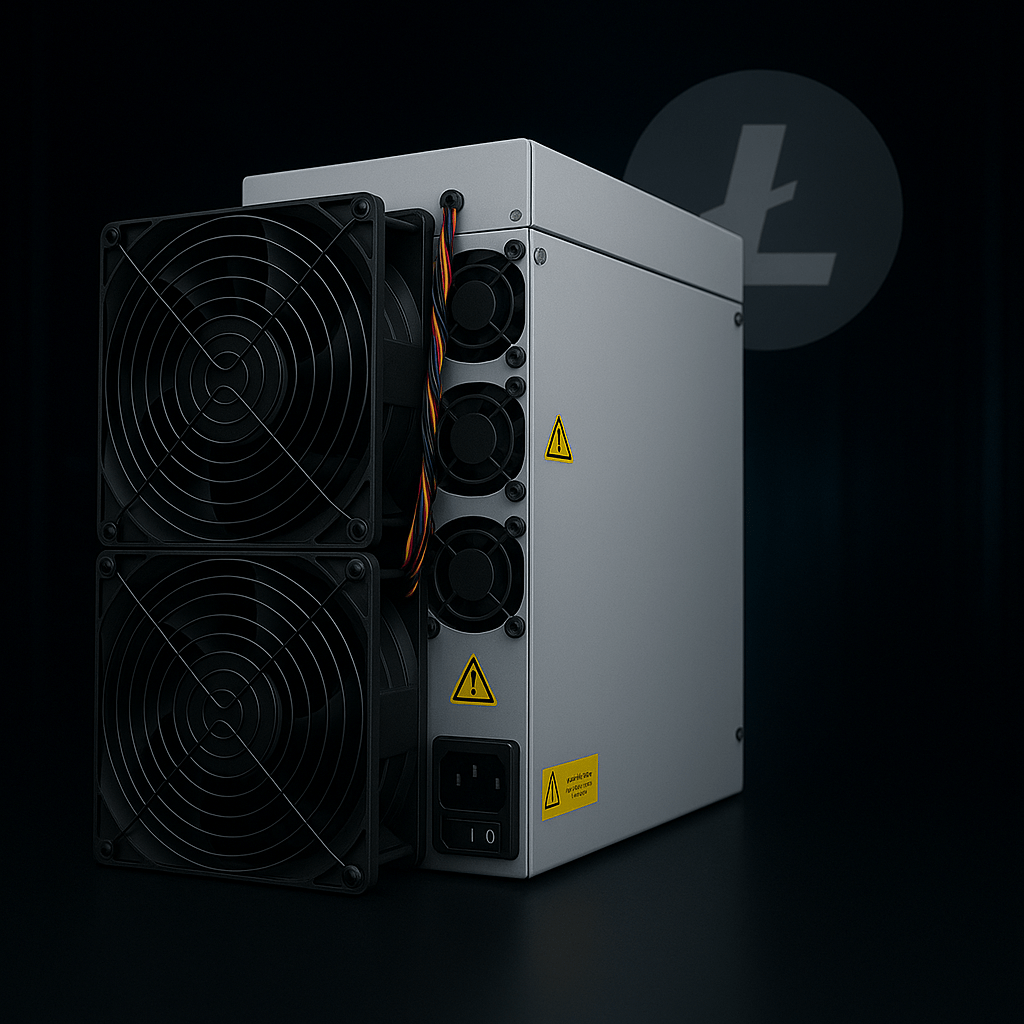
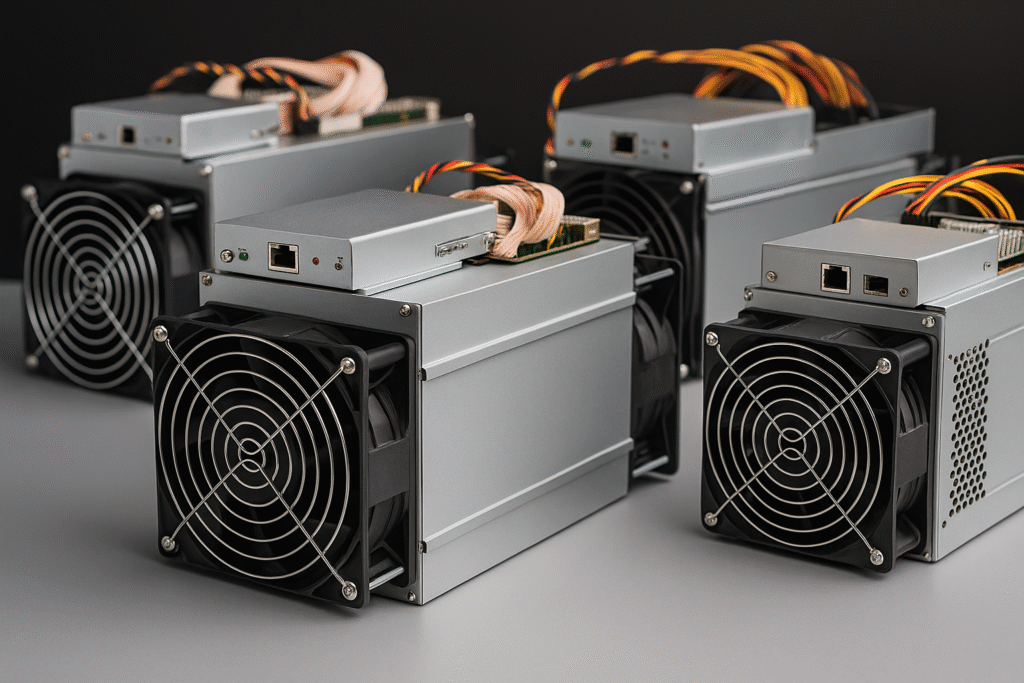
Discover the Best Litecoin Miners for 2026 in this in-depth guide. Compare top-performing ASIC hardware, specs, efficiency, and profitability to find the right LTC miner for your needs.
Litecoin (LTC), known as the “silver to Bitcoin’s gold,” continues to attract miners due to its fast block generation time and low transaction fees. With its foundation on the Scrypt algorithm, mining Litecoin requires powerful and efficient ASIC miners. In this comprehensive guide, we detail the top-performing Litecoin ASIC miners in 2026, compare their specifications, and recommend the best options for profitability, efficiency, and long-term viability.
What is Litecoin Mining and Why ASIC Miners Matter
Litecoin mining involves validating transactions and securing the network using computational power. The process is rewarded with LTC. As the network difficulty has increased over time, general-purpose CPUs and GPUs are no longer viable. Scrypt-based ASIC miners are now essential for anyone serious about mining Litecoin.
Top 7 Litecoin ASIC Miners in 2026
1. Bitmain Antminer L9 (16Gh) – The Most Powerful Scrypt Miner
Hashrate: 16,000 MH/s (16 Gh/s)
Power Consumption: 3360W
Efficiency: 0.21 J/MH
Algorithm: Scrypt
Noise Level: 75 dB
Ideal for: Large-scale Litecoin mining farms
Bitmain’s L9 is currently the industry leader for Scrypt mining in 2026. It offers unmatched power and excellent efficiency, making it the top pick for profitability when mining Litecoin and Dogecoin. With its dual mining potential and robust design, the L9 stands as the benchmark for professional miners.
2. Goldshell Mini-DOGE 2 – Best for Home Mining
Hashrate: 420 MH/s
Power Consumption: 400W
Efficiency: 0.95 J/MH
Algorithm: Scrypt
Noise Level: 35 dB
Ideal for: Beginners, home miners
This compact and quiet miner is ideal for those just getting started or running operations from home. With dual LTC and DOGE mining capabilities, it offers solid returns without high energy costs or loud noise, which makes it popular among small-scale enthusiasts.
3. Innosilicon A6+ LTCMaster
Hashrate: 2.2 GH/s
Power Consumption: 2100W
Efficiency: 0.95 J/MH
Algorithm: Scrypt
Noise Level: 80 dB
Ideal for: Mid-size mining setups
The A6+ LTCMaster is still relevant in 2026 due to its solid balance of hashrate and power draw. While it is not as efficient as the newer L9, its affordability on the second-hand market makes it a go-to for expanding existing farms.
4. Goldshell LT6
Hashrate: 3.35 GH/s
Power Consumption: 3200W
Efficiency: 0.95 J/MH
Algorithm: Scrypt
Noise Level: 80 dB
Ideal for: Serious Litecoin and Dogecoin miners
A strong contender in the mid-tier Scrypt mining category, the LT6 is designed for mining farms that need stability and compatibility with major mining pools. It’s a practical alternative to more expensive models, delivering reliable output.
5. FutureBit Apollo LTC Pod – Premium Solo Miner
Hashrate: 200 MH/s
Power Consumption: 250W
Efficiency: 1.25 J/MH
Algorithm: Scrypt
Noise Level: 30 dB
Ideal for: Hobbyists, solo miners
Built in the USA, the Apollo is a unique all-in-one miner with its own controller, power supply, and quiet fan. It’s designed for enthusiasts who want to solo mine LTC without dealing with loud hardware or complicated setups.
6. Goldshell Mini-DOGE Pro 2 – Silent and Efficient
Hashrate: 420 MH/s
Power Consumption: 400W
Efficiency: 0.95 J/MH
Algorithm: Scrypt
Noise Level: 35 dB
Ideal for: Silent home mining
The Pro version maintains the same specs as the original Mini-DOGE 2 but adds slight performance enhancements and better thermal management. It’s perfect for those prioritizing quiet operation and steady income from LTC and DOGE.
7. iBeLink BM-KS Max (Upcoming Competitor)
Hashrate: Expected ~10 GH/s
Power Consumption: ~3000W
Efficiency: ~0.3 J/MH
Algorithm: Scrypt (rumored support)
Ideal for: Miners seeking diversification
While not officially launched as of Q2 2025, leaked specs of the BM-KS Max suggest it could become a major player in the Scrypt mining market if released. Keep an eye on this one for innovation and potential LTC/DOGE profitability.
Litecoin Mining Profitability: Key Considerations
Electricity Cost: The biggest operational expense. Efficient miners with lower J/MH are essential for long-term viability.
Market Volatility: Litecoin prices fluctuate. Use mining calculators to estimate ROI based on current LTC value.
Dual Mining: Mining DOGE and LTC simultaneously can increase revenue without extra energy costs.
Hardware Longevity: Durable miners like the Antminer L9 or Apollo Pod are built to last 3+ years.
Comparison Table of the Best Litecoin Miners in 2026
Miner Name
Hashrate
Power (W)
Efficiency (J/MH)
Noise
Best For
Bitmain Antminer L9
16,000 MH/s
3360
0.21
75 dB
Large-scale mining
Goldshell Mini-DOGE 2
420 MH/s
400
0.95
35 dB
Home use
Innosilicon A6+
2,200 MH/s
2100
0.95
80 dB
Mid-scale operations
Goldshell LT6
3,350 MH/s
3200
0.95
80 dB
Farm expansions
FutureBit Apollo Pod
200 MH/s
250
1.25
30 dB
Solo mining
Goldshell Mini-DOGE Pro
420 MH/s
400
0.95
35 dB
Silent LTC mining
iBeLink BM-KS Max*
~10,000 MH/s
~3000
~0.3
TBD
High-power mining
*Projected specs based on leaks
Recommended Litecoin Mining Strategy in 2026
Diversify With Dual Mining
Mining Litecoin along with Dogecoin using merged mining capabilities maximizes profitability without increasing power costs. Most Scrypt ASIC miners automatically support merged mining through standard pool setups.
Monitor Difficulty and Hashrate Trends
Network difficulty adjusts every 2.5 minutes. Miners should track hashrate charts and adapt strategies by switching pools or upgrading hardware when returns drop.
Where to Buy Litecoin ASIC Miners
Trusted sources for buying new and used Litecoin ASIC miners include:
Always verify reseller credibility, warranty options, and import taxes.
Final Thoughts: Which Litecoin Miner Is Right for You?
For maximum profitability in 2025, Bitmain’s Antminer L9 is unmatched in power and efficiency. Home miners should choose compact, quiet devices like the Goldshell Mini-DOGE 2 or FutureBit Apollo Pod. If you’re scaling an operation, consider mixing LT6s or A6+ units based on budget.
Matching your goals with the right miner, energy cost, and strategy will determine your Litecoin mining success in 2025.
How to mine Dogecoin that’s the question on the minds of many crypto enthusiasts in 2025. Whether you’re in it for the fun, the profit, or the love of the Doge community, mining Dogecoin can still be a rewarding experience if you know what you’re doing.
In this guide, we’ll walk you through everything you need to know about mining Dogecoin from the hardware you need, to the best mining software, pool options, setup tips, and how to calculate potential profits. If you’re serious about getting started with Dogecoin mining, you’re in the right place.
What is Dogecoin?
Dogecoin started as a meme in 2013, featuring the famous Shiba Inu dog. But despite its humorous roots, Dogecoin quickly grew into a serious cryptocurrency. With backing from figures like Elon Musk and strong community support, it’s now a widely accepted coin with real-world use.
Why Learn How to Mine Dogecoin?
Learning how to mine Dogecoin offers a great entry point into the world of cryptocurrency. It’s a relatively simple process, and thanks to merged mining with Litecoin, Dogecoin is still a viable option for those looking to earn crypto through mining.
How to Mine Dogecoin Explained
What Does It Mean to Mine Dogecoin?
Mining Dogecoin involves validating transactions on the Dogecoin blockchain and being rewarded with DOGE coins. It’s a process of solving complex mathematical puzzles using computing power, helping secure the network in the process.
Dogecoin’s Blockchain and Scrypt Algorithm
Dogecoin uses a proof-of-work algorithm based on Scrypt, similar to Litecoin. This makes it faster and more efficient to mine compared to Bitcoin, which uses the SHA-256 algorithm. Scrypt is memory-intensive, favoring ASICs and, in some cases, GPUs.
Is It Still Worth Learning to Mine Dogecoin in 2025?
Profitability of Mining Dogecoin Today
Yes, but with conditions. Dogecoin mining can be profitable if you have the right setup. That includes efficient hardware, cheap electricity, and smart mining practices. It’s not a get-rich-quick scheme, but a solid long-term play.
Mining Challenges in the Current Market
Competition is rising. ASIC miners dominate the scene, making it harder for hobbyists to keep up. Also, electricity costs can eat into profits if not managed wisely. Still, if you’re strategic, you can make it work.
Ways to Learn to Mine Dogecoin
Solo Mining Dogecoin
Solo mining is where you go it alone—no pools, no partners. While the full reward goes to you, the chances of finding a block solo are slim unless you have massive hashing power.
Pool Mining Dogecoin
This is the most popular option. You join a group of miners who combine their power to solve blocks more frequently. The rewards are then split based on contribution.
Cloud Mining Dogecoin
Don’t want to buy hardware? Cloud mining allows you to rent hashing power from a remote data center. It sounds easy, but you must be cautious—many cloud mining sites are scams.
How to Solo Mine Dogecoin
Pros and Cons of Solo Mining
Pros:
You get 100% of the reward.
More control over your operations.
Cons:
Very low chances of finding a block.
Requires expensive equipment.
Why Solo Mining Dogecoin Is Risky
Unless you have high-end ASICs running 24/7, solo mining Dogecoin is like buying one lottery ticket and hoping to hit the jackpot.
How to Pool Mine Dogecoin
What Are Dogecoin Mining Pools?
Mining pools are groups of miners working together to increase the chance of earning rewards. You contribute your hash power and earn a percentage of the block reward based on your contribution.
Top Mining Pools for Dogecoin in 2025
Prohashing
Litecoinpool.org
Aikapool
ViaBTC
All of these support merged mining, which means you can mine Litecoin and Dogecoin simultaneously.
How to Cloud Mine Dogecoin
What Is Cloud Mining for Dogecoin?
Cloud mining involves paying a third party to do the mining for you. You buy a contract that gives you a fixed amount of hash power over time.
Is Cloud Mining Dogecoin Legit or a Scam?
There are legitimate services, but many are scams. Always do your research. Avoid services promising unrealistic profits.
How to Mine Dogecoin with Litecoin (Merged Mining)
What Is Merged Mining?
Merged mining lets you mine two cryptocurrencies simultaneously without using more energy. With Dogecoin, it means you can mine Litecoin and Dogecoin at the same time.
Why Dogecoin Is Mined With Litecoin
Dogecoin shares its algorithm with Litecoin, so miners can process blocks for both chains at once. This benefits both coins and increases network security.
Best Hardware for Learning How to Mine Dogecoin
ASICs vs. GPUs for Dogecoin Mining
ASICs are the kings of mining. They’re faster, more efficient, and purpose-built for the job. GPUs are more flexible but can’t compete with ASICs in terms of Dogecoin mining.
The Antminer L9 is a top-tier miner that works perfectly for Dogecoin via merged mining with Litecoin. It offers excellent efficiency and high performance.
Other Hardware Options to Mine Dogecoin
Goldshell Mini-DOGE 2: Compact and user-friendly. Great for home mining setups.
Innosilicon A6+: High hash power but higher electricity usage.
These alternatives are solid for beginners or those with limited space and budget.
Best Software for Mining Dogecoin
Dogecoin Mining Software Options
CGMiner
EasyMiner
MultiMiner
Awesome Miner
These programs help manage and optimize your mining setup.
How to Set Up Dogecoin Mining Software
Download and install the software.
Connect your wallet.
Link to a mining pool.
Configure settings.
Start mining.
Step-by-Step Guide on How to Mine Dogecoin
Step 1: Set Up a Dogecoin Wallet
Use wallets like Trust Wallet, Exodus, or Dogecoin Core. These will store your mining rewards safely.
Step 2: Choose Mining Hardware
Pick the best miner for your needs and budget. ASICs like the L9 are ideal.
Step 3: Install Dogecoin Mining Software
Use compatible mining software and configure it to connect with your hardware and pool.
Step 4: Select a Mining Method
Choose between solo, pool, or cloud mining based on your setup and expectations.
Step 5: Start Mining Dogecoin
Launch your software and begin the process. Monitor performance and payouts regularly.
How to Mine Dogecoin Profitably
Power Consumption and Efficiency
Keep an eye on electricity costs. More efficient miners lead to higher profit margins.
Calculating Hashrate and ROI
Use online calculators to estimate profits based on your hardware, electricity rates, and mining difficulty.
How to Secure Your Dogecoin Earnings
Choosing a Dogecoin Wallet
Pick a wallet with strong security features. Hardware wallets like Ledger and Trezor are highly recommended.
Hot vs Cold Storage for Dogecoin
Hot Wallets: Online, more convenient but vulnerable.
Cold Wallets: Offline, safer for long-term storage.
Mistakes to Avoid When Learning How to Mine Dogecoin
Not Calculating Profitability
Mining blindly is a quick way to lose money. Always do your math.
Overheating and Setup Failures
Keep your setup cool and stable. Overheating can damage your equipment and lower efficiency.
Conclusion
Learning how to mine Dogecoin in 2025 is still a smart move—if done right. Whether you go solo, join a pool, or rent hash power in the cloud, make sure you understand the costs, risks, and rewards. With the right hardware like the Antminer L9 and efficient strategies, you can make Dogecoin mining a profitable part of your crypto journey.
FAQs
1. Is it too late to learn how to mine Dogecoin? No, it’s not too late. With the right tools and strategy, mining Dogecoin is still a viable way to earn cryptocurrency.
2. How long does it take to mine 1 Dogecoin? It depends on your hardware and pool. In most cases, you earn fractions of DOGE continuously and accumulate over time.
3. Can you mine Dogecoin on a smartphone? Technically yes, but it’s highly inefficient and not profitable. It’s more of a fun experiment than a serious mining effort.
4. Is mining Dogecoin better than trading it? It depends on your skills and goals. Mining offers passive accumulation, while trading requires timing and market knowledge.
5. Do I need a license to mine Dogecoin? No license is needed in most countries. However, check your local regulations to be safe.
Wondering how profitable is crypto mining in 2025? You’re not alone. With crypto prices bouncing back and mining hardware getting more efficient, a lot of people are asking whether it’s still worth jumping into the game. Maybe you’ve seen those massive mining farms online or heard about people making thousands a month from their basement setups. But is it really that easy or profitable? In this guide, we’ll break down everything you need to know to decide if crypto mining is a golden opportunity or just digital fool’s gold. Let’s dig in.
What is Crypto Mining?
Crypto mining is the process of verifying blockchain transactions and adding them to a public ledger. In return for this work, miners receive cryptocurrency as a reward. It requires computing power, specialized hardware, and a fair amount of electricity. But at its core, crypto mining is all about solving complex mathematical problems for digital gold.
Understanding How Profitable Crypto Mining Is Today
So, how profitable is crypto mining in today’s market? The answer depends on several factors: hardware efficiency, electricity rates, mining difficulty, and—of course—the price of cryptocurrencies. In 2025, the market is rebounding, and new miners are wondering whether it’s finally time to plug in and start hashing.
What Affects How Profitable Crypto Mining Can Be?
Mining profitability isn’t just about buying a rig and watching Bitcoin roll in. Several key elements impact your bottom line:
Hardware efficiency (Joules per hash)
Electricity rates (measured per kWh)
Mining difficulty and network hashrate
Crypto price volatility
Pool fees or solo mining rewards
Location and cooling costs
Every one of these factors will either boost or shrink your profit margins.
Is Mining Still Worth It in 2025?
Yes and no. If you’re mining with outdated gear or paying high electricity rates, you’ll struggle to turn a profit. On the flip side, miners using next-gen ASICs with access to cheap or renewable energy are seeing consistent gains, especially with Bitcoin and Kaspa both trending upward this year.
How Profitable Is Crypto Mining for Beginners?
Many newcomers ask how profitable is crypto mining when starting small. You don’t need a massive farm to earn, but expectations should be realistic.
Start-Up Costs and ROI Timelines
Let’s talk numbers. A decent ASIC like the Antminer S21 Pro can cost around $3,000 to $4,000. Add to that setup costs (cooling, power supply, wiring), and you’re looking at an upfront investment of $5,000 or more. Click Here To Buy
Now, with the right conditions, ROI (return on investment) can take 8–16 months. But if crypto prices rise or electricity is cheap, that payback period shortens dramatically.
The Learning Curve and Maintenance Costs
Mining isn’t plug-and-play. You’ll need to learn about firmware updates, pool configurations, and cooling. Plus, fans burn out, boards fail, and dust builds up. These maintenance issues eat into profits but are manageable if you stay proactive.
How Profitable Is Crypto Mining with ASICs vs GPUs?
There’s an ongoing debate in the mining world: ASICs or GPUs? Let’s compare them head-to-head.
Comparing Power Efficiency
ASICs are purpose-built. For example, the Antminer L9 gets 16Gh/s at just 3360W, giving a top-tier efficiency of 0.21J/Mh. Meanwhile, even top-end GPUs can’t come close in terms of hash-per-watt output.
If your goal is to maximize how profitable crypto mining can be, ASICs are the clear winner in 2025.
Which Offers Better Long-Term Profitability?
GPUs offer flexibility—you can switch between altcoins. ASICs are locked into specific algorithms but dominate on cost-per-hash.
So, if you’re mining seriously and want strong, consistent returns, ASICs win. If you’re experimenting or want flexibility, GPUs have their place.
How Profitable Is Crypto Mining for Bitcoin?
Bitcoin is still the king of crypto—and its mining rewards are huge, but also fiercely competitive.
SHA-256 Algorithm and Its Impact
Bitcoin uses the SHA-256 hashing algorithm, which is ideal for powerful ASICs like the Antminer S21 XP (270Th/s). This type of mining requires serious power, but with cheap energy, Bitcoin mining remains highly profitable.
Mining Pool vs Solo Mining Profitability
Unless you own a mining farm, solo mining Bitcoin isn’t realistic. Pools combine hashrates and share rewards, creating smaller but more frequent payouts.
Joining a reliable pool increases your chances of predictable income—and that’s key to answering how profitable is crypto mining sustainably.
How Profitable Is Crypto Mining for Altcoins?
Altcoin mining is rising again. Coins like Litecoin, Dogecoin, and Kaspa are gaining traction with home miners.
Litecoin and Dogecoin Mining
Thanks to merged mining, Litecoin and Dogecoin can be mined simultaneously with Scrypt ASICs. With the new Antminer L9 hitting 16Gh/s, miners can earn both coins while using less power—making this strategy one of the most profitable in the altcoin scene today.
Kaspa and Other Emerging Coins
Kaspa uses the KHeavyHash algorithm and is surging in popularity due to its speed and decentralization. The Bitmain KS7 (40Th/s at just 3080W) is a top pick for Kaspa mining and offers surprisingly fast ROI due to the low power draw and strong daily yield.
How Electricity Costs Affect How Profitable Crypto Mining Is
One of the biggest factors determining how profitable is crypto mining is electricity.
Countries with Low Mining Costs
If you’re mining in regions like:
Venezuela
Iran
Russia
Texas (USA)
Iceland
…you can access some of the lowest electricity rates worldwide. Miners in these areas see significantly higher profits than those paying standard utility rates.
Using Solar or Green Energy to Improve Profit Margins
Some miners are going off-grid with solar setups or hydroelectric power. While the upfront cost is high, it slashes monthly expenses and boosts long-term profits.
If you want to turn mining into a long-term venture, investing in renewable power is a game changer.
How to Calculate How Profitable Crypto Mining Can Be
Before jumping in, use calculators like:
WhatToMine
ASIC Miner Value
NiceHash profitability tools
Input your rig’s hashrate, power draw, electricity cost, and pool fees. These tools give you daily, monthly, and yearly income projections.
Factoring in Market Volatility and Difficulty
Profit calculators don’t always show the full picture. Difficulty levels change every two weeks (for BTC), and coin prices rise or fall rapidly.
So while a rig may look profitable today, always plan for lower income months ahead.
Tips to Make Crypto Mining More Profitable
Want to increase how profitable your crypto mining can be? Follow these tips:
Hardware Optimization
Flash efficient firmware (like BraiinsOS or HiveOS)
Undervolt for power savings
Overclock within safe thermal limits
Efficient Cooling and Setup Management
Use industrial fans or ducting to manage airflow
Install temp monitors and auto shutdowns
Keep your setup clean and dust-free
Small tweaks in setup can save thousands in electricity and avoid hardware failure.
The Future: How Profitable Is Crypto Mining Likely to Be?
Looking ahead, the mining scene is maturing. Energy-efficient rigs, smart firmware, and global expansion mean the profitability of mining is getting more strategic—but not impossible.
With BTC halvings and new altcoin demand, the field is getting narrower but more focused. Only efficient miners will thrive.
Real-World Examples: How Profitable Is Crypto Mining for Individuals?
Let’s look at two real-world cases:
Small-Scale Setup Profit Reports
John, a home miner in Oklahoma, runs 3 Antminer L9 units on residential power at $0.06/kWh. He clears about $1,200/month in pure profit after power and pool fees.
Industrial Farm Case Studies
A farm in Paraguay uses hydroelectric power at $0.02/kWh. With 500 Antminer S21 Hyd units, they clear over $150,000/month net profit. Their ROI was hit within 6 months.
Common Myths About How Profitable Crypto Mining Is
Myth 1: “Mining is dead.” Not true—profitability depends on how smart your setup is.
Myth 2: “Only big farms make money.” Solo miners with the right gear still pull profits.
Myth 3: “It’s too late to start mining.” The tech is evolving—you just need to start right.
Conclusion: Is Crypto Mining Still a Smart Move?
So, how profitable is crypto mining in 2025? The short answer: very—if you play your cards right. Profitability today depends on smart hardware choices, cheap energy, and keeping up with tech shifts. Whether you’re mining Bitcoin, Kaspa, or Scrypt coins, there’s still real money to be made. But this isn’t passive income—you’ve got to put in the work, stay updated, and think like a business owner.
FAQs – How Profitable Is Crypto Mining?
1. What is the average ROI for a home miner in 2025? With proper hardware and low electricity rates, ROI can be achieved in 8–14 months.
2. Can I mine profitably without cheap electricity? It’s tough but possible with energy-efficient rigs like the KS7 or S21 Pro.
3. Which coin is the most profitable to mine right now? Bitcoin remains top-tier, but Kaspa and merged mining (LTC/DOGE) are trending.
4. How does network difficulty impact profitability? Higher difficulty means lower rewards per hash, so profitability drops if difficulty spikes.
5. Is cloud mining profitable in 2025? Rarely. Most cloud mining platforms are overpriced or scams—hardware mining is safer.
If you’re wondering is crypto mining still profitable in 2025, you’re not alone. With rising electricity costs, evolving algorithms, and more powerful ASIC miners hitting the market, it’s a fair question to ask. Crypto mining isn’t what it used to be back in 2017 or even 2021. But that doesn’t mean it’s dead — in fact, for the smart and strategic miner, it could still be a solid way to earn passive income.
Let’s break it all down in simple terms and find out what mining looks like today—and whether it’s still profitable for everyday folks and businesses alike.
The Evolution of Crypto Mining
From CPUs to ASICs
In the beginning, crypto mining was done using regular CPUs. Then came GPUs, which brought in much more power and efficiency. But now, it’s all about ASICs—Application-Specific Integrated Circuits. These machines are purpose-built to mine specific algorithms like SHA-256 (used by Bitcoin) and offer massive hashrates with better energy efficiency.
Industrial-scale Mining and Decentralization Challenges
With the rise of ASICs came large mining farms—entire warehouses full of machines running 24/7. This industrial-scale mining introduced concerns around decentralization, as a few players now control large chunks of the hashrate.
How Crypto Mining Works
Proof of Work (PoW)
Most mined cryptocurrencies use a system called Proof of Work, where miners solve complex math problems to validate transactions and secure the network. In return, they get rewarded with newly minted coins.
Key Algorithms Used
SHA-256: Used by Bitcoin and Bitcoin Cash
Scrypt: Used by Litecoin and Dogecoin
KHeavyHash: Used by Kaspa (KAS)
Etchash, KawPow, and others: For GPU-mineable altcoins
What Determines Mining Profitability?
Hashrate and Mining Difficulty
As more miners join a network, the difficulty increases, making it harder to mine. If your hardware can’t keep up, you’re earning less per second.
Electricity Costs
This is a major one. Mining rigs suck up a ton of electricity. If you live in a region with high power costs, your profit margins could disappear fast.
Hardware Efficiency
A miner that produces high hashrate with low power consumption is key. For instance, the Antminer S21 XP Hyd is a beast at this, thanks to its high efficiency.
Token Prices and Market Volatility
Even if your setup is efficient, your profitability hinges on the market price of the coin you’re mining. If Bitcoin drops in price, your mining revenue might too.
Pool vs Solo Mining
Solo mining is nearly impossible for major coins like Bitcoin unless you have a ton of hashrate. Most people join mining pools where profits are shared but more consistent.
Current State of Crypto Mining in 2025
Market Conditions
With Bitcoin reaching new highs and coins like Kaspa gaining momentum, interest in mining has surged. But it’s also become highly competitive.
Technological Advancements
Today’s ASICs are smarter, faster, and more efficient. The new-gen miners like Antminer KS7 and Antminer S21 Pro are engineered for max profitability.
Regulatory Environment
Governments are keeping a closer eye on mining—especially due to its energy consumption. Some regions are banning it; others are incentivizing it with green energy.
Most Profitable Coins to Mine Right Now
Bitcoin (BTC)
Still king, but you need serious investment. With ASICs like the Antminer S21 XP Hyd, it’s still profitable in areas with cheap power.
Kaspa (KAS)
One of the most promising coins in 2025. Lightweight, fast block times, and supports GPU and ASIC mining. The KS7 miner dominates this space.
Litecoin and Dogecoin (Merged Mining)
These two use the same algorithm, so you can mine them together—a two-for-one deal that boosts profitability.
Other GPU-Friendly Coins
Coins like Ravencoin, Neoxa, and others still offer options for GPU miners, though profits are thinner.
Home Mining vs. Industrial Mining
Home Mining Realities
If you’re running a couple of rigs at home, heat and noise will be your daily headache. Also, electricity bills can eat your profits if you’re not careful.
Cloud Mining and Hosted Options
These let you rent mining power from a farm, saving you from hardware and setup hassle—but they also carry risks like scams or low returns.
Is Solo Mining Dead?
Not entirely. For newer or niche coins, solo mining can work. But for Bitcoinor Ethereum Classic? You’re better off in a pool.
The ROI of Modern Mining Rigs
Top ASIC Miners in 2025
Antminer S21 XP Hyd (473Th)
Antminer S21 Pro (234Th)
Antminer KS7 (40Th)
These units balance power and performance, with the S21 XP Hyd leading in efficiency. Click Here To Buy
Break-even Periods
Depending on power costs and token prices, most rigs break even in 6 to 18 months—faster if prices go up.
Maintenance and Resale Value
Good rigs can run for 3+ years. After that, they still have resale value—especially during bull markets.
Environmental Impact and ESG Factors
Green Mining Initiatives
More miners are going green—using hydro, solar, or wind power to reduce their carbon footprint.
Renewable Energy Adoption
Countries like Iceland and Canada are mining hotspots because of cheap, clean power. Mining in 2025 is shifting toward sustainability.
Tips to Stay Profitable in 2025
Use Mining Calculators
Sites like WhatToMine or ASIC Miner Value help you estimate daily profits based on your setup and power rate.
Monitor Electricity Rates
Consider mining during off-peak hours or using smart plugs to control rig activity based on power costs.
Join Reputable Mining Pools
Stick to established pools like F2Pool, ViaBTC, or NiceHash to avoid payout issues.
Upgrade to Efficient Rigs
Don’t get stuck with outdated machines. Newer models offer better returns and lower energy consumption.
The Future of Crypto Mining
Shift to Proof of Stake (PoS)
Coins like Ethereum have moved away from mining. But PoW still rules Bitcoin, Kaspa, and many others.
Can PoW Survive Regulation and Pressure?
Yes—but it will need to become more sustainable. Green mining and technological upgrades are the path forward.
Conclusion
So, is crypto mining still profitable in 2025? Yes—but only if you play it smart. It’s no longer a plug-and-play money machine. You need efficient hardware, access to cheap electricity, and the right strategy. Whether you’re mining Bitcoin with a high-end ASIC or diving into Kaspa with a KS7, there’s still money to be made. Just make sure you’re not mining blindly.
FAQs
1. Is mining crypto legal in all countries? No. Some countries like China have banned it, while others like El Salvador actively encourage it. Always check local regulations.
2. How long does it take to mine 1 BTC? Depends on your hashrate. With a top-tier ASIC, it could take months—even in a mining pool.
3. Can you mine crypto on your phone? Technically, yes. But it’s inefficient, unprofitable, and can damage your device.
4. What is the most efficient miner in 2025? The Antminer S21 XP Hyd (473Th) is currently the most efficient Bitcoin miner in the market.
5. How do taxes work on mined crypto? In most countries, mined coins are treated as income when received and subject to capital gains tax when sold. Always consult a tax professional.
If you’re serious about cryptocurrency mining, you’ve probably already come across the term ASIC miners for sale. These high-performance, purpose-built machines are designed to mine specific cryptocurrencies with unmatched efficiency. Whether you’re starting a new mining operation or scaling up your current setup, finding the right ASIC miners for sale can make all the difference in your profitability. In this article, we’ll dive into the world of ASIC mining, break down the best models available, and show you why Bibeam.com is the best place to buy them.
What Are ASIC Miners?
Understanding the Basics of ASIC Technology
ASIC miners are specialized hardware designed for one purpose: to perform cryptocurrency mining tasks more efficiently than traditional mining rigs. Unlike general-purpose CPUs or GPUs, which can handle multiple functions, ASICs are optimized for a single algorithm, making them much faster and more energy-efficient.
Why Choose ASIC Miners Over Other Mining Hardware?
The most significant advantage of ASIC miners is their efficiency. With high hash rates and lower power consumption, ASICs can generate significantly higher profits compared to other types of mining equipment. Their precision in handling specific mining algorithms, like SHA-256 for Bitcoin or Scrypt for Litecoin, makes them ideal for large-scale operations.
Top ASIC Miners for Sale on Bibeam.com
1. Bitmain Antminer S21 XP Hyd (473Th)
One of the most powerful models available, the Bitmain Antminer S21 XP Hyd boasts a hash rate of 473 terahashes per second (Th/s). With its hydro cooling system, it is designed for efficiency, making it a great choice for those who want to maximize their mining output while keeping energy consumption low.
2. Bitmain Antminer L9 (16Gh)
If you’re into mining cryptocurrencies like Dogecoin or Litecoin, the Antminer L9 is an excellent choice. With a hash rate of 16 gigahashes per second (Gh/s) and energy consumption of just 3360W, it offers solid performance for Scrypt-based mining algorithms. This miner is perfect for small to medium-sized mining farms looking to diversify their operations.
3. Bitmain Antminer S21 Pro (234Th)
A powerhouse in the world of SHA-256 mining, the Antminer S21 Pro offers a hash rate of 234 terahashes per second, making it one of the most efficient miners available today. With its low energy consumption of 3510W, this model is perfect for miners looking to generate high returns without breaking the bank on electricity costs.
4. Bitmain Antminer KS7 (40Th)
If you’re specifically interested in mining Kaspa, the Antminer KS7 is the perfect tool for the job. With a hash rate of 40 terahashes per second, this ASIC miner is tailored for KHeavyHash mining, ensuring optimized performance for the Kaspa network. It’s a great choice for anyone looking to mine newer, up-and-coming coins.
5. Bitmain Antminer S19 XP Hydro (473Th)
This is another hydro-cooled miner that has gained popularity for its performance and energy efficiency. Offering a hash rate of 473 terahashes per second and operating with a low energy consumption of just 5676W, the Antminer S19 XP Hydro is ideal for large-scale Bitcoin mining operations that want to keep their energy costs in check while maximizing performance.
Why Buy ASIC Miners from Bibeam.com?
1. Trusted by Miners Worldwide
At Bibeam.com, we’re not just another mining hardware store we’re a name trusted by miners around the world. From beginners to full-scale mining operations, customers rely on us for quality, reliability, and performance. Our reputation is built on delivering top-tier ASIC miners and exceptional customer service
2. Competitive Pricing
We understand the importance of getting the best value for your investment. That’s why we offer competitive pricing on all of our ASIC miners. Whether you’re purchasing a single unit or multiple machines for a larger mining farm, you can count on us for the best prices.
3. Fast Shipping
When you purchase ASIC miners from Bibeam.com, you don’t have to worry about long wait times. We offer fast shipping to ensure that your mining operation gets up and running as quickly as possible.
4. Expert Support
We don’t just sell ASIC miners; we provide ongoing support to ensure that you have everything you need to succeed in cryptocurrency mining. Our team of experts is available to assist you with setup, troubleshooting, and optimizing your mining hardware.
5. Secure Payments and Transactions
We prioritize your security when making transactions on our website. With secure payment options and a straightforward checkout process, you can buy your ASIC miners with peace of mind.
How to Choose the Right ASIC Miner for Your Needs
1. Determine Your Mining Goals
Before purchasing an ASIC miner, it’s important to define your mining goals. Are you looking to mine Bitcoin, Ethereum, or another cryptocurrency? Different ASIC miners are designed to handle specific algorithms, so knowing which cryptocurrency you plan to mine will help you choose the right equipment.
2. Consider Hash Rate and Power Consumption
Two of the most important factors to consider when choosing an ASIC miner are the hash rate and power consumption. A higher hash rate means more processing power, which typically translates to more mining rewards. However, high-performance miners often consume more electricity, so you’ll need to balance these factors to ensure profitability.
3. Evaluate Your Budget
ASIC miners can range in price from a few hundred to several thousand dollars, depending on the model and its features. Make sure to set a budget and choose a miner that fits within your price range while meeting your performance requirements.
The Benefits of Mining with ASIC Miners
1. Higher Profitability
ASIC miners are built for one specific purpose: mining. As a result, they offer superior performance and efficiency compared to other types of mining hardware. This translates to higher profitability for miners, especially when electricity costs are factored in.
2. Reliability and Durability
ASIC miners are built to last. They are designed with heavy-duty components and advanced cooling systems, ensuring that they can run for extended periods without overheating or experiencing technical issues. This makes them a reliable choice for both home miners and large mining farms.
3. Easier to Operate
Compared to GPU mining rigs, ASIC miners are relatively easy to set up and operate. Most ASIC miners come with user-friendly interfaces and can be plugged into your power supply and internet connection, allowing you to start mining in no time.
Conclusion: Start Your Mining Journey with ASIC Miners
In conclusion, ASIC miners are the best choice for anyone looking to mine cryptocurrencies efficiently and profitably. With powerful models available at Bibeam.com, you’re sure to find the perfect miner for your needs. Whether you’re a beginner or an experienced miner, the right ASIC miner can make all the difference in maximizing your mining rewards. Start your mining journey today by exploring our wide selection of ASIC miners.
Frequently Asked Questions (FAQs)
1. What is an ASIC miner?
An ASIC miner is a specialized piece of hardware designed specifically for cryptocurrency mining. It is more efficient and powerful than general-purpose hardware like CPUs or GPUs, making it ideal for mining operations.
2. Can I mine Bitcoin with an ASIC miner?
Yes, many ASIC miners are designed to mine Bitcoin using the SHA-256 algorithm. Popular models like the Bitmain Antminer S21 XP and Antminer S19 XP are excellent choices for Bitcoin mining.
3. How much electricity do ASIC miners use?
Electricity consumption varies depending on the model. However, ASIC miners are generally more energy-efficient than other types of mining rigs. Be sure to check the power consumption specifications when choosing an ASIC miner.
4. Are ASIC miners difficult to set up?
No, ASIC miners are relatively easy to set up. They come with simple plug-and-play functionality and require minimal configuration to start mining.
5. Where can I buy ASIC miners?
You can purchase ASIC miners directly from Bibeam.com, where we offer a wide selection of top-quality mining hardware at competitive prices.
As the mining landscape evolves with increasing difficulty and fluctuating rewards, choosing the right Bitcoin mining hardware in 2025 is more critical than ever. We’ve compiled the most comprehensive and up-to-date guide on the best ASIC miners this year engineered for maximum profitability, efficiency, and long-term ROI.
What Is Bitcoin Mining Hardware?
Bitcoin mining hardware refers to specialized computers known as ASICs (Application-Specific Integrated Circuits) built solely to perform SHA-256 hash computations required by the Bitcoin network. These machines dominate modern mining operations due to their unmatched performance, power efficiency, and reliability.
1. Bitmain Antminer S21 XP Hyd (473Th/s) – Most Powerful Bitcoin Miner of 2026
The S21 XP Hyd is Bitmain’s flagship hydro-cooled model in 2025. Designed for industrial-scale deployments, this beast of a machine delivers an incredible 473 terahashes per second while maintaining ultra-low efficiency of just 12 joules per terahash.
Key Advantages:
Immense hashrate ideal for large-scale operations
Hydro cooling allows reduced thermal wear and noise
Lower operational cost per terahash
2. Bitmain Antminer S21 XP (270Th/s) – Best Air-Cooled Bitcoin Miner
Hashrate: 270 Th/s Power Consumption: 3645W Efficiency: 13.5 J/Th Cooling: Air-cooled Use Case: Warehouse and home miners with adequate ventilation
The Antminer S21 XP strikes a perfect balance between performance and flexibility. With no need for specialized cooling infrastructure, it offers superior air-cooled efficiency while delivering high throughput for mid- to large-scale farms.
This newly launched model surpasses the 500 Th/s milestone, setting a new standard in the ASIC world. Although it’s only suitable for farms with liquid cooling infrastructure, its unbeatable performance makes it the king of ROI in high-volume settings.
4. MicroBT WhatsMiner M60S++ (280Th/s) – Best Bitmain Alternative
Hashrate: 280 Th/s Power Usage: 3960W Efficiency: 14.14 J/Th Manufacturer: MicroBT Deployment: Scalable, compatible with standard racks
MicroBT continues to challenge Bitmain’s dominance. The WhatsMiner M60S++ offers slightly lower energy efficiency but maintains rock-solid stability and excellent support. A great choice for miners looking to diversify their hardware portfolio.
5. Bitmain Antminer S19k Pro (120Th/s) – Budget-Friendly & Reliable
Hashrate: 120 Th/s Power Consumption: 2760W Efficiency: 23 J/Th Best For: Entry-level and small-scale miners Cooling: Standard air cooling
Still widely available and supported in 2025, the S19k Pro delivers reliability for those who can’t yet invest in the S21 series. While not as efficient, it remains profitable in regions with cheaper electricity.
Technical Comparison Table
Miner
Hashrate (Th/s)
Power (W)
Efficiency (J/Th)
Cooling Type
Best Use Case
Antminer S21 XP Hyd
473
5676
12
Hydro
Large-scale operations
Antminer S21 XP
270
3645
13.5
Air
Industrial/home hybrid
Antminer S21 XP+ Hyd
500
6000
12
Hydro
Maximum performance farms
WhatsMiner M60S++
280
3960
14.14
Air
Bitmain alternative
Antminer S19k Pro
120
2760
23
Air
Budget/entry miners
Bitcoin Mining Profitability in 2026
Bitcoin mining profitability is affected by:
Mining difficulty: Adjusts every ~2 weeks
Bitcoin price volatility: High prices improve ROI
Electricity cost: Miners under 14 J/Th favored in high-cost zones
Pool fees and uptime: Even 1% downtime affects long-term profit
Where to Buy Bitcoin Mining Hardware in 2026
The market is flooded with resellers, but trusted vendors ensure warranty, logistics, and after-sales support. Always verify:
Manufacturer certification
Reseller reputation and reviews
Shipping and customs compliance
Return policy and warranty coverage
Recommended vendor:Bibeam.com — a reputable source for Bitmain.
Setting Up Your Bitcoin Miner
Power supply check: Match PSU to miner’s rated wattage + 10%
Cooling environment: Ensure airflow or hydro setup
Network setup: Connect to LAN and configure static IP
Mining pool selection: Choose low-fee pools with high uptime
If you’ve been waiting for the next big move in Scrypt mining, Bitmain just delivered literally. The Antminer L9 is here, and it’s built to dominate the Litecoin (LTC) and Dogecoin (DOGE) mining scene. With jaw dropping specs, improved efficiency, and solid profitability even with 2025’s energy prices, it’s the powerhouse miner we’ve been expecting.
Bitmain has a legacy of producing some of the most powerful and reliable ASIC miners on the market. From SHA-256 to Scrypt, they’ve consistently stayed ahead of the curve and the Antminer L9 proves they’re not slowing down.
What is the Antminer L9?
The Antminer L9 is Bitmain’s latest ASIC miner designed specifically for Scrypt-based mining, with Litecoin and Dogecoin at the top of its list. With a maximum hashrate of 16Gh/s and a power consumption of 3360W, it’s not only more powerful than its predecessors but also more energy-efficient.
If you’re serious about mining Litecoin or Dogecoin — or both — the L9 is built for you.
Key Specifications of Antminer L9
Detailed Hardware Overview
Let’s break down what the L9 brings to the table in terms of raw power, build, and operational standards.
Technical Specifications Table
Specification
Details
Manufacturer
Bitmain
Model
Antminer L9 (16Gh)
Release Date
May 2024
Hashrate
16Gh/s (Scrypt algorithm)
Power Consumption
3360W
Efficiency
0.21 J/Mh
Noise Level
75dB
Cooling
2 Fans
Size
195 x 290 x 379mm
Weight
13.5kg
Interface
Ethernet
Temperature Range
5 – 45°C
Humidity Range
5 – 95%
Profitability of the Antminer L9
Let’s get to what really matters — how much money can this machine make you?
Real-World Profitability (As of May 2025)
Based on current Scrypt coin prices and electricity rates, here’s what you can expect from the Antminer L9:
Profitability Table
Timeframe
Income
Electricity Cost
Profit
Daily
$20.92
-$8.06
$12.86
Monthly
$627.69
-$241.92
$385.77
Yearly
$7,636.93
-$2,943.36
$4,693.57
These numbers are based on an average electricity cost of $0.10/kWh. Your actual profitability will depend on your local power rates and market fluctuations.
What Makes the Antminer L9 Stand Out?
It’s not just about the numbers — the Antminer L9 has real-world performance advantages that make it the go-to choice:
Ultra-high hashrate for Scrypt at 16Gh/s
Efficient power usage with just 0.21 J/Mh
Stable build and optimized fan cooling
Excellent for both LTC and DOGE mining simultaneously
Compared to older models, this is a leap forward, not just a step.
How to Set Up the Antminer L9
Getting the L9 up and running is relatively straightforward:
Unbox and place in a well-ventilated room.
Connect power to a 240V outlet.
Connect Ethernet to your network.
Log in to the miner interface via its IP address.
Input mining pool credentials, and you’re off!
Make sure the room temperature stays between 5–45°C to avoid overheating.
Electricity Costs and ROI
The biggest operational expense in mining? Electricity.
At 3360W, the L9 isn’t lightweight in terms of power. But when you break it down, the profit margins still hold strong, especially when you compare it to L7 or competing Scrypt miners.
At $0.10/kWh, daily power cost is around $8.06
Monthly profit: over $385
ROI in less than a year, depending on upfront cost
Where to Buy the Antminer L9
You can buy the Antminer L9 right now from our official store at:
We offer fast shipping, secure checkout, and top-tier support. Don’t wait — supplies are limited, and this miner is in high demand.
Comparison With Previous Models
Let’s see how the L9 compares to its predecessor, the L7:
Feature
Antminer L7
Antminer L9
Hashrate
9.5Gh/s
16Gh/s
Power Draw
3425W
3360W
Efficiency
0.36 J/Mh
0.21 J/Mh
Release Year
2021
2024
The improvements are clear: better efficiency, higher output, and optimized design.
Is It Worth Buying in 2025?
With crypto markets stabilizing and DOGE/LTC expected to surge post-halving, the L9 couldn’t have come at a better time. It’s profitable, powerful, and future-ready. For miners looking to scale or upgrade, this is a no-brainer.
Ideal Mining Setup for the L9
Here’s what you’ll need:
240V dedicated circuit
Sound insulation for 75dB noise level
Cooling system or airflow management
Stable internet connection
This ensures maximum uptime and hardware longevity.
Long-Term Viability
Built with long-haul performance in mind, the Antminer L9 is expected to have a lifespan of 3–5 years or more, with proper care.
It’s also resale-worthy, especially if you keep it clean and maintain performance.
Community and Support
Bitmain provides:
Firmware updates
Mining pool integrations
Active community support
Global servicing options
Whether you’re a beginner or a pro, you’ll find help when you need it.
Final Verdict
The Antminer L9 is more than just an upgrade — it’s a powerful statement from Bitmain. Whether you’re mining DOGE, LTC, or any other Scrypt-based coin, this machine offers incredible performance and profitability.
If you’re thinking of upgrading your setup or entering Scrypt mining for the first time, this is the miner to beat in 2025.
FAQs
1. What coins can I mine with the Antminer L9?
You can mine any Scrypt-based coins, including Litecoin (LTC) and Dogecoin (DOGE) — the two most profitable.
2. Where can I buy the Antminer L9?
You can purchase it directly from our website: bibeam.com.
3. Is the L9 loud?
Yes, it produces around 75dB of noise — similar to a vacuum cleaner. It’s best suited for garages or mining farms.
4. How much power does the Antminer L9 use?
It uses 3360 watts, so you’ll want a dedicated 240V line for safe operation.
5. Can I mine both LTC and DOGE at the same time?
Yes! Thanks to merged mining (AuxPoW), you can mine both simultaneously — maximizing your rewards.
Enter theAntminer L9 Bitmain latest Scrypt miner, purpose-built for Dogecoin and Litecoin. This 2025 release is already turning heads with its cutting-edge technology, massive 16Gh/s hashrate, and strong profitability metrics.
Whether you’re a seasoned pro or just entering the mining scene, the Antminer L9 offers serious potential to maximize your returns. In this in-depth review, we’ll explore everything from its hardware specifications and performance to real-world profitability and how it stacks up against previous models. If you’re serious about mining Dogecoin in 2025, this is one machine you can’t afford to ignore.
What Makes the Antminer L9 So Hyped?
In 2025, crypto mining continues to evolve rapidly, and with Dogecoin holding strong as a top altcoin, the release of the Antminer L9 couldn’t have come at a better time. Bitmain’s latest Scrypt algorithm miner is making serious noise in the community — and we don’t just mean the 75dB fan hum. But is it really the best Dogecoin miner on the market right now? Let’s break it all down.
What is the Antminer L9?
Release Date and Market Buzz
Launched in May 2024, the Antminer L9 (16Gh) arrived as the much-anticipated successor to Bitmain’s L7 series. With impressive hashing power and an upgraded design, it’s geared toward those mining both Dogecoin (DOGE) and Litecoin (LTC) via the Scrypt algorithm.
The L9 was quickly adopted by serious miners looking for better efficiency and profitability, especially after Dogecoin’s continued mainstream relevance.
Scrypt Algorithm Mining Explained
If you’re mining Dogecoin or Litecoin, you’re dealing with the Scrypt algorithm — which favors high-speed processing over complex computational depth (unlike SHA-256 for Bitcoin). This is where the Antminer L9 shines, offering raw power specifically tuned for Scrypt coins.
Antminer L9 Specifications Overview
Before we dive deeper into performance, here’s a detailed look at the L9’s specs:
Full Hardware Specs Table
Specification
Detail
Manufacturer
Bitmain
Model
Antminer L9 (16Gh)
Release Date
May 2024
Size
195 x 290 x 379 mm
Weight
13.5 kg
Noise Level
75 dB
Fans
2
Power Usage
3360W
Interface
Ethernet
Temperature Range
5 – 45 °C
Humidity Range
5% – 95%
This miner’s build is compact yet powerful — optimized for professional mining farms and capable home setups with proper ventilation.
Performance Review: Speed & Hashrate
Hashrate Power: 16Gh/s for Scrypt
At a whopping 16Gh/s, the Antminer L9 crushes its competition in the Scrypt category. This raw hashrate allows it to mine Dogecoin and Litecoin simultaneously, maximizing earnings with merged mining capabilities.
How It Handles Litecoin & Dogecoin Dual Mining
The dual mining approach makes the L9 exceptionally profitable. Every block mined earns you both DOGE and LTC, increasing your ROI and improving your flexibility in choosing which coin to hold or sell based on market conditions.
Power Consumption: Is It Efficient?
Energy Use vs Profit Potential
Power efficiency is crucial in 2025, with electricity costs climbing globally. The Antminer L9 draws 3360W, which is high but acceptable given the performance. Thanks to its solid J/Mh ratio (~0.21 J/Mh), it still manages to remain profitable.
Profitability Analysis in 2026
Let’s look at real profitability numbers based on average electricity cost ($0.10/kWh) and current DOGE/LTC prices.
Real-World Profit Table Based on Current Rates
Period
Income
Electricity Cost
Profit
Daily
$21.58
-$8.06
$13.51
Monthly
$647.32
-$241.92
$405.40
Yearly
$7,875.75
-$2,943.36
$4,932.39
Even after power costs, the Antminer L9 generates significant returns — making it one of the most profitable DOGE miners available today.
How Does Antminer L9 Compare to Previous Models?
Versus Antminer L7 and Other Scrypt Miners
The L9 outpaces the Antminer L7 in every category. Higher hashrate, better stability, and improved cooling efficiency put it well ahead. The only downside is a slight increase in power consumption — but that’s easily offset by higher earnings.
Compared to other Scrypt miners in 2025, none match the L9’s hashrate and long-term reliability.
Setup & Installation
Cooling, Environment, and Noise Control Tips
Given its 3360W power draw and 75dB noise level, ventilation and placement are key.
Location: Place it in a dedicated space — mining farms, garages, or sound-insulated rooms work best.
Cooling: Ensure proper airflow. External fans or AC units can help maintain the 5–45 °C operating range.
Noise: Use foam panels or enclosures to reduce sound if mining at home.
Who Should Buy the Antminer L9?
Home Miners vs Farm Operators
Home Miners: If you have a stable electrical setup and can handle the heat/noise, the L9 can be a great addition to your solo mining rig.
Farm Operators: With bulk scalability and high ROI, this miner is ideal for professionals scaling DOGE/LTC operations.
Where to Buy the Antminer L9?
Looking to grab the Antminer L9 (16Gh)?
It’s available now on our official store at Bibeam.com – competitive pricing, trusted shipping, and full Bitmain warranty included.
Don’t get scammed avoid third-party resellers with no credentials.
Pros and Cons of the Antminer L9
Advantages
Exceptional 16Gh/s hashrate
Reliable profitability for DOGE/LTC
Durable Bitmain build quality
Supports merged mining
Compact design for power
Limitations
High power consumption (3360W)
Noisy at 75dB (may need noise dampening)
Not ideal for basic home use without proper setup
Final Verdict: Is This the Best Dogecoin Miner of 2026?
Our Expert Recommendation
The Antminer L9 easily earns its place as the top Dogecoin miner in 2025. While it requires solid infrastructure and planning, the performance, profitability, and potential for long-term earnings make it a worthy investment for serious miners.
If you want to dominate Scrypt mining, the L9 should be at the top of your list.
Conclusion
Bitmain has delivered again with the Antminer L9 — a miner that blends raw power, Scrypt specialization, and real-world profit potential. Whether you’re upgrading from the L7 or just entering the Dogecoin mining space, this machine sets a new benchmark in 2025.
And the best part? You don’t have to look far to get one — it’s ready to ship today from Bibeam.com
FAQs About the Antminer L9
Q1: What coins can I mine with the Antminer L9? You can mine Scrypt-based coins like Dogecoin, Litecoin, DigiByte, and more.
Q2: Is it loud enough to disturb neighbors? At 75dB, it’s loud. It’s best run in a garage, basement, or mining shed — not a bedroom.
Q3: How long does it take to ROI with the Antminer L9? At current rates, the average break-even point is 9–12 months.
Q4: Is the L9 better than the Antminer L7? Yes — the L9 delivers better performance, improved efficiency, and stronger profits.
Q5: Can I run this on standard home electricity? Not easily. You’ll likely need a dedicated 240V setup with proper breakers.
Discover how to mine Bitcoin effectively in 2026 with our comprehensive beginner’s guide. Learn the essential tools and strategies needed for successful and profitable crypto mining.
So if you’re new to this world or just trying to understand whether Bitcoin mining is right for you in 2025, this guide will walk you through everything you need to know no fluff, no hype, just solid, real-world advice.
The Evolution of Bitcoin Mining
From CPU to ASIC: A Timeline
2009–2010: People mined Bitcoin using regular home computers (CPUs).
2010–2013: GPU mining became the norm as it was far more efficient.
2013–2016: FPGA (Field-Programmable Gate Array) mining was briefly popular.
Mining has industrialized. In 2025, you’ll find massive mining farms running thousands of ASICs — but you’ll also find smart individuals making money from home using efficient equipment and cheaper electricity sources.
Is Bitcoin Mining Still Profitable in 2026?
Understanding Profitability
Bitcoin mining profits depend on:
The hash rate of your machine (how fast it solves problems)
The electricity cost in your area
Mining difficulty (which adjusts roughly every two weeks)
Bitcoin’s market price
Key Factors Influencing Profit
Efficiency of your hardware
Pool fees
Uptime and cooling efficiency
Local regulations and electricity rates
Choosing the Right Mining Hardware
ASIC vs. GPU in 2025
For Bitcoin, ASICs are your only real option. GPUs are still good for altcoins, but SHA-256 (Bitcoin’s algorithm) is far too competitive for general-purpose hardware in 2025.
Best for: Serious home miners with proper cooling.
Antminer S21 XP (270Th)
Hashrate: 270Th/s
Power: 3645W
Efficiency: 13.5 J/Th
Best for: Profitable and energy-efficient mining at home
Antminer S21 Pro (234Th)
Hashrate: 234Th/s
Power: 3510W
Efficiency: 15 J/Th
Best for: Balanced performance and energy consumption
Whatsminer M60S (260Th)
Hashrate: 260Th/s
Power: 3690W
Efficiency: 14.2 J/Th
Best for: High-output environments
Avalon A1466 (150Th)
Hashrate: 150Th/s
Power: 3300W
Efficiency: 22 J/Th
Best for: Entry-level ASIC users
Mining Farm vs. Home Mining
Benefits of Home Mining
Full control over your machines
Avoid hosting fees
Easier to monitor
When to Consider a Mining Farm Setup
You’re scaling beyond 10+ ASICs
You need industrial cooling and infrastructure
You want hands-off management
Setting Up Your Bitcoin Mining Operation
Hardware Setup Essentials
ASIC miner (see our top picks above)
Power supply (typically included)
Network connection (Ethernet preferred)
Mining software or firmware
Electrical Requirements
Many ASICs run on 220V — check compatibility
Use surge protectors and quality power distribution
Cooling and Noise Control
ASICs get HOT. Use fans, ventilation, or immersion cooling
Noise levels can exceed 75 dB — consider soundproofing or isolating machines
Choosing a Bitcoin Mining Pool
What is a Mining Pool?
A mining pool combines computing power from multiple miners to increase chances of solving a block and earning rewards. Rewards are shared proportionally.
Best Mining Pools in 2026
Foundry USA
F2Pool
Antpool
ViaBTC
Binance Pool
Choose a pool with low fees, high uptime, and solid reputation.
Bitcoin Mining Software
Recommended Mining Software for 2026
BraiinOS+ (for Antminers)
Hive OS
LuxOS
CGMiner (for experienced users)
How to Configure and Monitor
Use web interfaces or APIs to monitor hashrate and temperature
Set restart conditions for overheating or low hashrate
Monitor power usage via smart PDU or wall meters
Electricity Costs and Optimization
How Electricity Impacts Profitability
Electricity is your largest expense. Even with efficient ASICs, mining can’t be profitable if your power rate is too high.
Tips to Reduce Your Power Bill
Mine during off-peak hours (if on time-of-use billing)
Use solar or hydro setups
Optimize airflow to reduce cooling energy
Negotiate commercial rates if using multiple machines
Regulatory and Legal Considerations
Is Bitcoin Mining Legal in Your Region?
Before you mine, check local regulations. Some countries restrict mining due to energy usage or crypto laws.
Permits, Taxes, and Reporting in 2026
Check if you need a business permit
Report mining income on taxes
Some jurisdictions tax mined BTC as ordinary income
Cloud Mining in 2026
What is Cloud Mining?
Renting hash power from a company that operates the hardware. You get a share of the mined Bitcoin without running any machines.
Is It Worth It for Beginners?
Pros: No setup, less risk of hardware failure
Cons: High fees, lower profits, often scam-prone
Verdict: Not recommended unless you really understand the provider
Risks and Challenges in Bitcoin Mining
Hardware Depreciation
ASICs lose value fast. Expect 30–50% depreciation within 1–2 years.
Market Volatility
If BTC drops in price, your profits shrink — sometimes below zero.
Difficulty Adjustment
Bitcoin’s algorithm adjusts every 2,016 blocks. If difficulty spikes, weaker miners may become unprofitable.
Environmental Impact and Sustainability
Green Mining Initiatives
Solar-powered rigs
Hydro-mining containers
Carbon offset credits
Should You Consider Hydro or Solar?
Yes — especially if your local grid is expensive or unreliable. ROI may take longer, but the long-term savings can be huge.
Tips for Long-Term Mining Success
Keep machines updated with latest firmware
Join mining communities to stay informed
Reinvest profits into newer hardware
Diversify with altcoin mining or trading profits
Conclusion
Mining Bitcoin in 2025 is still very much alive — but it’s not for the faint of heart. You need the right tools, the right location, and a strategy. If you’re serious and you play it smart, mining can still be a lucrative way to earn Bitcoin. Just remember: this is a business, not a lottery.
FAQs
1. What’s the best ASIC miner for beginners in 2025? The Antminer S21 Pro (234Th) is a great starting point due to its balance of efficiency and price.
2. How much can I make mining Bitcoin per day? It varies widely depending on your hardware, power cost, and BTC price — but $5 to $25 per day is typical with a top-tier ASIC.
3. Do I need a license to mine Bitcoin at home? Usually not, but check your local zoning, energy, and tax laws.
4. Can I mine Bitcoin using my gaming PC? Technically yes, but it’s not profitable. You’ll earn more with altcoins or just buying Bitcoin.
5. Is it better to mine Bitcoin or buy it in 2026? If electricity is expensive in your area, it might be smarter to buy. But with cheap power and efficient hardware, mining can outperform buying in the long term.
Choosing the Right Mining Pool in 2026
When you’re starting out, solo mining might sound appealing—you keep all the rewards, after all. But unless you’re running a farm of ultra-powerful ASICs, solo mining isn’t profitable anymore. This is where mining pools come in. Think of them like a team sport: everyone contributes hash power, and when the pool mines a block, everyone gets a share of the reward based on their contribution.
In 2025, some of the most popular and reliable Bitcoin mining pools include:
Foundry USA – Known for high transparency and reliable payouts
Antpool – Operated by Bitmain, it’s ideal if you’re using their Antminer models
F2Pool – One of the oldest pools, supporting global miners with a user-friendly interface
ViaBTC – Offers merged mining, allowing you to mine other coins alongside Bitcoin
Look at payout methods (PPS, FPPS, PPLNS), fees (typically 1-2%), uptime, and geographic proximity to maximize efficiency.
How to Set Up Bitcoin Mining Software in 2026
Once you’ve got your mining hardware and joined a pool, the next step is setting up mining software. This software connects your ASIC to the pool and tells it how to work.
Popular Bitcoin Mining Software for 2025:
Braiin’s OS+ – A customized firmware that’s perfect for Antminer models; it improves efficiency and unlocks performance tuning
Awesome Miner – A complete dashboard solution to manage multiple miners from one interface
CGMiner – One of the oldest and most robust CLI-based mining programs
EasyMiner – Great for beginners due to its GUI interface and basic setup options
Here’s a typical software setup process:
Connect to the miner’s IP address via your web browser.
Login using default credentials (often “root/root”).
Enter your mining pool URL, worker ID, and password.
Save and apply changes—the miner will now start hashing.
Electricity and Cooling: Your Profit Depends on It
Electricity costs are still the number one factor in determining profitability. At rates above $0.10 per kWh, mining becomes far less appealing unless you have extremely efficient hardware.
How to Reduce Electricity Costs:
Use Off-Peak Power: Some utilities offer discounted night rates.
Go Solar: If you’re in a sunny region, solar can reduce long-term power costs.
Negotiate Commercial Rates: If you’re running multiple rigs, utilities may offer industrial pricing.
Cooling Your Mining Rig
All ASIC miners produce significant heat—especially the top-performing models. Without proper ventilation or cooling, hardware can overheat and throttle performance or shut down.
Popular cooling setups include:
Exhaust Fans + Ducting: Route hot air outside your mining space
Immersion Cooling Tanks: Submerge your ASICs in dielectric fluid to eliminate fan noise and heat
Dedicated AC Units: Costly but sometimes necessary in hot climates
Bitcoin Mining Regulations in 2026
Understanding the legal landscape is essential. In 2025, regulation varies widely depending on where you’re located. Here’s a general breakdown:
Countries Friendly to Bitcoin Mining:
El Salvador – Incentives and geothermal power for mining operations
United States (Texas & Wyoming) – Pro-mining states with cheap energy and business-friendly policies
Kazakhstan – Known for hosting large mining farms, though regulations are tightening
Countries Restrictive or Banned:
China – Full ban remains in place for most crypto-related activities
India – Regulatory uncertainty and high energy costs discourage mining
EU Nations (some) – ESG and environmental rules are creating challenges for large-scale miners
Before you start mining, check with a local crypto-savvy lawyer or regulatory body.
Maintenance and Troubleshooting: Keeping Your Miner Running
Bitcoin mining isn’t “set it and forget it.” To stay profitable, you’ll need to regularly maintain your rigs.
Common Issues in 2026:
Hashrate Drops – Caused by overheating, dust, poor PSU, or bad cables
Fan Failures – Fans degrade over time; consider aftermarket replacements
Firmware Bugs – Always use official firmware or reputable custom firmware
Pool Disconnections – Double-check your network and pool URL
Tools You’ll Need:
Compressed Air – For cleaning dust
Thermal Paste – For restoring contact between heatsinks and chips
Multimeter – Useful for power diagnostics
A monthly inspection goes a long way in extending the life of your equipment.
Bitcoin Mining Profitability Calculator (How to Use One in 2026)
To make smart decisions, always run the numbers before investing in mining equipment.
Key Inputs for a Mining Calculator:
Hashrate (in TH/s)
Power consumption (in watts)
Electricity cost per kWh
Pool fee
BTC price (real-time)
Popular calculators like those from WhatToMine, NiceHash, and CryptoCompare are updated regularly for real-time profits.
Here’s a sample breakdown using the Antminer S21 XP Hyd (473Th/s):
Hashrate: 473 Th/s
Power: 5676W
Electricity cost: $0.06/kWh
BTC price: $65,000
Profit: ~$30–$50/day after costs (at May 2025 rates)
ROI and Break-Even Time for Bitcoin Miners in 2026
Let’s say you buy the Antminer S21 XP Hyd for $7,500 and run it at $0.06/kWh.
Now let’s consider a less efficient model, like the older S19j Pro:
Cost: $2,000
Profit: $8/day
Break-even: 250 days
As you can see, the most energy-efficient machines offer the fastest ROI, even if their upfront cost is higher.
Future-Proofing Your Bitcoin Mining Setup
Mining isn’t just about today. It’s about adapting to the future. Here’s how you can stay competitive:
Upgrade to Hydro or Immersion ASICs – These are quieter, more durable, and more efficient.
Consider Mining Altcoins (Temporarily) – When Bitcoin difficulty spikes, switching to SHA-256 altcoins can keep things profitable.
Sell Hashpower – Use platforms like NiceHash to rent out your hashpower when BTC prices dip.
Also, stay on top of Bitcoin halving cycles—the next one is expected in 2028, and historically, halvings affect profitability and market behavior dramatically.
Conclusion
Bitcoin mining in 2025 isn’t just for the tech elite anymore. With powerful new ASICs, optimized mining pools, and better cooling solutions, the barrier to entry is lower than ever—if you plan smartly.
Start by selecting the right miner for your goals and electricity cost. Pair it with efficient mining software, choose a reputable pool, and monitor your setup regularly. Focus on energy efficiency and ROI calculations, and you’ll be set up to mine Bitcoin profitably this year.
The future of Bitcoin mining is still bright—especially for those who mine smart.
FAQs: How to Mine Bitcoin in 2026
Q1: Can I mine Bitcoin with my PC in 2026? No. Bitcoin mining now requires specialized ASIC hardware. CPUs and GPUs are no longer viable due to network difficulty.
Q2: How much does it cost to start Bitcoin mining in 2026? Depending on the hardware, expect to invest between $2,000 and $10,000. Energy and cooling costs are additional.
Q3: Is Bitcoin mining still profitable? Yes, if you have access to cheap electricity and use efficient miners like the S21 XP Hyd or S21 Pro.
Q4: Can I mine Bitcoin at home? Yes, but you’ll need to manage heat and noise. Hydro or immersion-cooled ASICs are ideal for home use.
Q5: What is the best Bitcoin miner in 2026? The Bitmain Antminer S21 XP Hyd (473Th/s) is considered one of the top-performing and most energy-efficient miners available today.
Discover the best mining rig for sale that boosts your crypto mining efficiency. Explore our selection of high performance rigs designed for both beginners and experienced miners to maximize hash rates and energy savings.
What Is Crypto Mining?
Crypto mining is the backbone of blockchain networks like Bitcoin, Litecoin, and Kaspa. It’s the process of validating transactions and adding them to a digital ledger. In return, miners earn cryptocurrency as a reward. But the catch? You need serious computing power to do it efficiently—and that’s where mining rigs come in.
Why the Right Rig Matters
Choosing the right mining rig isn’t just about power. It’s about balancing performance with energy use, managing heat, and getting the best possible return on investment (ROI). Whether you’re just starting out or scaling up a mining farm, picking the right equipment makes a huge difference.
Types of Mining Rigs
ASIC Mining Rigs
ASICs (Application-Specific Integrated Circuits) are built for one job—mining a specific algorithm. They’re extremely efficient and powerful. Popular for mining Bitcoin, Scrypt, and other major coins.
GPU Mining Rigs
These are built using standard graphics cards (GPUs). They’re more flexible and can mine a variety of coins like Ethereum Classic, Ravencoin, and others. Great for those who want versatility or plan to mine emerging cryptocurrencies.
FPGA Mining Rigs
Field-Programmable Gate Arrays are customizable and sit somewhere between GPUs and ASICs in terms of power and efficiency. Less common but interesting for niche miners.
Which One is Right for You?
ASICs: Best for long-term, coin-specific mining.
GPUs: Great for flexibility and altcoins.
FPGAs: Ideal for miners who want custom solutions with lower power needs.
Key Features to Consider Before Buying
Hash Rate
This is how much processing power your rig has. The higher the hash rate, the more likely you are to earn rewards. But be careful—higher isn’t always better if your power bill eats your profits.
Power Consumption
A rig’s wattage plays a major role in monthly costs. Always calculate your electricity rate against the machine’s power draw.
Cooling Systems
Rigs generate heat fast. Look for models with built-in fans, hydro-cooling, or support for immersion cooling.
ROI and Efficiency
You want your rig to pay itself off as quickly as possible. That’s why efficient energy use and a strong hash rate are key.
Top Mining Rigs in 2025
Bitmain Antminer S21 Pro
Hashrate: 234Th/s
Power Consumption: 3510W
Efficiency: 15 J/Th
Ideal for BTC miners looking for top-tier performance. Click Here To Buy
There are countless online options, but beware of scams and unreliable vendors. Only shop with verified and trusted sellers.
Marketplaces vs Authorized Dealers
While peer-to-peer marketplaces might offer lower prices, authorized dealers like bibeam.com provide warranties, professional support, and guaranteed product authenticity.
Buy Your Mining Rig from a Trusted Source – Visit bibeam.com
Looking for the best mining rig for sale? bibeam.com is your go-to source for high-performance rigs, handpicked to meet the demands of today’s miners.
Why bibeam.com is the Preferred Source
Verified and tested mining rigs
Competitive pricing on the latest models
Secure and fast shipping
Dedicated support for beginners and experts
Real-time inventory updates
What You Can Expect From Us
At bibeam.com, we make buying mining rigs simple and transparent. Our team is ready to guide you through choosing the right model and ensuring your mining operation is set up for success.
Setting Up Your Rig the Right Way
Location and Power Supply
Always choose a well-ventilated area and a stable, high-wattage power source.
Cooling and Ventilation
Use fans, AC, or hydro-cooling depending on your setup to prevent overheating.
Mining Pool Configuration
Join a reputable mining pool to improve your chances of steady payouts.
Common Mistakes to Avoid
Ignoring power costs
Buying without checking ROI
Skipping proper ventilation
Trusting shady sellers
How to Maximize ROI With the Right Rig
Choose a rig that balances hash rate and power use. Pair it with a low-electricity-cost setup and optimize your mining schedule based on network difficulty.
Is Home Mining Still Profitable in 2025?
Yes—if you use the right rig, manage electricity costs, and stay updated on market trends. ASIC rigs with high efficiency like the S21 XP can make home mining viable.
Future-Proofing Your Mining Investment
Stick to rigs with strong efficiency ratings and software upgrade paths. Consider immersion cooling for longevity. Regular maintenance also helps extend lifespan and performance.
Conclusion
Finding the best mining rig for sale in 2025 isn’t just about specs. It’s about trust, performance, and long-term value. Whether you’re diving into mining for the first time or upgrading your farm, bibeam.com has the right tools to help you succeed. Don’t gamble on uncertain vendors—buy your mining rig from a trusted source and mine with confidence.
FAQs
What is the most profitable mining rig in 2025?
The Bitmain Antminer S21 XP Hyd offers the best performance and efficiency for BTC mining in 2025.
Is it better to buy a new or used mining rig?
New rigs come with warranties and reliability. Used rigs can be cheaper but carry more risk.
How do I calculate ROI on a mining rig?
Factor in the rig cost, power consumption, electricity rates, network difficulty, and expected monthly returns.
Can I mine different cryptocurrencies with one rig?
Yes, especially with GPU or FPGA rigs. ASICs are typically locked to one algorithm.
Where can I buy a reliable mining rig online?
Visit bibeam.com for trusted, tested, and high-performance mining rigs